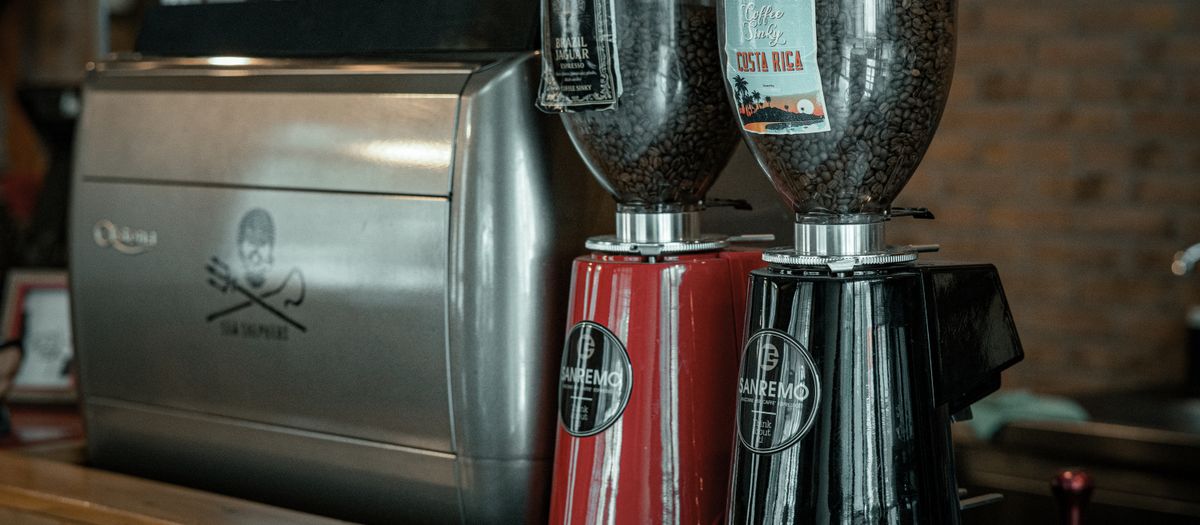
When I left the pod machine behind, I did exactly what most people do: I walked into the hobby and bought the shiniest espresso machine I could afford. A big dual-boiler, the kind with two pressure gauges and a wand that looks like it belongs in a café. It ate almost my entire budget. With the leftovers — and I mean the actual leftovers — I bought the cheapest grinder I could find that claimed it could do espresso.
For months, my shots were terrible. Sour. Thin. Watery. Sometimes they’d gush out in eight seconds, sometimes they’d choke and drip for a minute. I blamed the beans. I blamed the machine. I blamed myself, mostly, because everyone online seemed to be pulling gorgeous shots and I couldn’t get one to taste like anything but disappointment.
The machine was never the problem
Here’s what took me far too long to understand: the espresso machine pushes hot water through coffee at pressure. That’s most of what it does. The grinder is what decides how fine and how evenly that coffee is ground — and grind is the single biggest lever you have over how a shot tastes.
A cheap grinder can’t grind fine enough, or consistently enough, for espresso. The particles come out all different sizes. Water races through the big gaps and barely touches the fine dust, so half your coffee is over-extracted and half is under-extracted in the same shot. You taste both at once, which mostly reads as sour and harsh and weak. No machine on earth fixes that. I had a brilliant machine making bad espresso because the coffee going into it was ground badly.
The day I swapped the grinder
I finally caved and bought a proper single-dose espresso grinder — the kind built to grind fine and consistent for espresso, nothing fancy. I didn’t change the machine. I didn’t change the beans. I didn’t change my technique that morning.
The shot transformed overnight. Suddenly it poured slow and even, dark and glossy, with real crema. It actually tasted sweet. I sat there a little annoyed, honestly, because I’d spent months chasing this and the answer was the part I’d treated as an afterthought.
How I’d split the budget now
If I were starting over, I would not spend 90% on the machine and 10% on the grinder. I’d aim closer to an even split — and if money were truly tight, I’d happily put more into the grinder than the machine and buy a simpler, single-boiler machine to balance it out. A modest machine with a great grinder beats a great machine with a modest grinder every single time at home.
That’s the whole reason Shot & Steam exists. I lost months — and a chunk of money — to getting the split backwards, and I’d genuinely rather you didn’t.
If you’re standing at the start of this, read how to choose your first home espresso machine before you buy anything. It walks the budget split in plain English, in the order I wish someone had walked me.
This is general home-barista experience from my own kitchen, not a prescription for your setup. Follow each product’s instructions and dial in to your own taste.