Accessories & Workflow
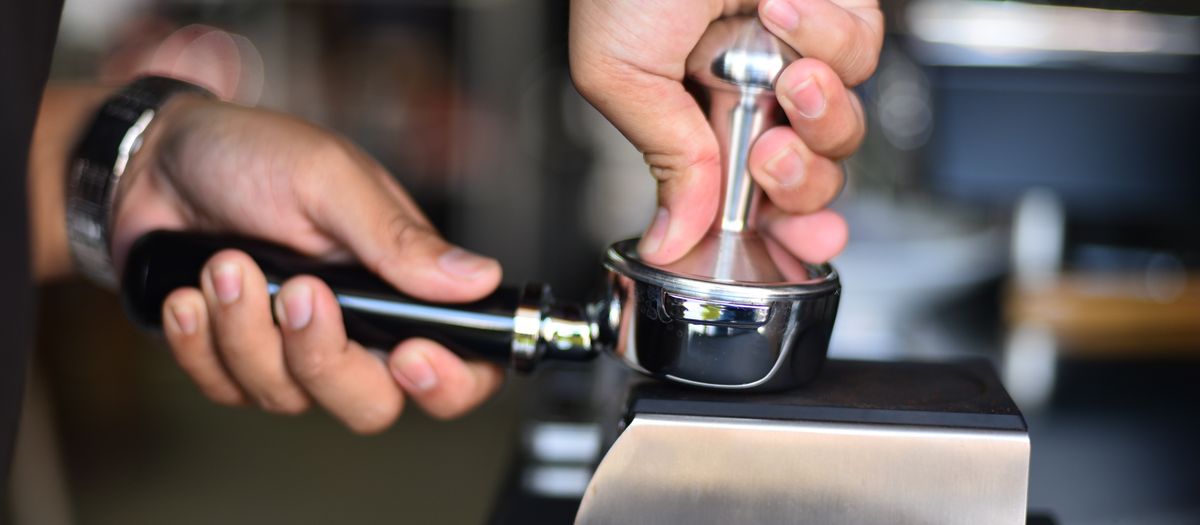
The workflow kit is where the cheapest, highest-impact upgrades live. This silo covers the barista toolkit — tamper, distributor, WDT tool, bottomless portafilter, scale, knock box, puck screen and tamping mat — and how good puck prep turns an inconsistent machine into a repeatable one. It also sorts out what is worth buying first. Specs are verified against manufacturer and current Amazon listings; no hands-on testing is claimed.
A quick frame before the gear: this kit only matters once the foundations are right. If you haven't yet sorted the machine and grinder, start with the beginner's guide and the machine-vs-grinder budget split — accessories sharpen a good setup, they don't rescue a poorly matched one. With the foundations in place, though, this is the most rewarding money in espresso dollar for dollar.
Why puck prep is the cheapest upgrade in espresso
Once your grinder is producing a fine, consistent grind, the next variable is how evenly that coffee is packed into the basket. Uneven coffee channels — water finds the path of least resistance, races through the loose spots, and you get a shot that's somehow sour and harsh at once. The workflow tools below exist to remove that unevenness, and almost none of them are expensive. This is why a $30 set of prep tools can change your shots more than a much pricier machine: it attacks the variable that actually breaks most home shots.
The tamper
The tamper compresses the grounds into a level, even puck. The thing that matters most is fit — it should match your portafilter basket diameter (58mm on most prosumer machines, but check yours), so it presses the whole bed evenly with no gap at the edge where water can escape. Beyond fit, a flat base and comfortable weight are the essentials; calibrated (spring-loaded) tampers help you apply a consistent pressure while you're still learning. The best espresso tampers guide compares them on type, material, size and compatibility.
WDT tool and distributor
These two tackle even prep from different angles. A WDT tool (Weiss Distribution Technique) is a set of fine needles you stir gently through the dry grounds to break up clumps before tamping — it's one of the highest-value, lowest-cost upgrades in all of espresso, because clumps are a leading cause of channelling. A distributor levels the surface of the grounds before you tamp, so the puck starts flat. Using a WDT tool then a distributor, then tamping, is the prep routine that quietly fixes most beginner channelling.
Scale and bottomless portafilter
A scale turns espresso from guesswork into measurement: you weigh the dose going in and the yield coming out, so every shot is a repeatable recipe rather than a hopeful guess. A small scale that fits under the portafilter and reads to 0.1g is plenty. A bottomless (naked) portafilter removes the spouts so you can watch the underside of the puck as it extracts — channelling shows up instantly as squirting jets, which makes it the single best diagnostic tool for fixing your prep. Together they're how you actually dial in and keep a shot consistent.
Knock box, puck screen, tamping mat and pitcher
Beyond the prep essentials sits a tier of gear that won't change your extraction but makes the whole process cleaner and more pleasant — which matters more than it sounds, because friction is what makes people stop pulling shots. A knock box gives you somewhere to bang out the spent puck without wrecking your bin or your counter. A tamping mat protects the bench and gives the portafilter a stable, grippy spot to tamp on. A puck screen — a thin metal mesh placed on top of the puck — keeps the group head cleaner and can help with a tidier flow, a small but genuinely nice upgrade. And if you make milk drinks, a well-shaped milk pitcher in a size that suits your cup makes steaming and pouring far easier to control, which is the difference between flat foam and silky microfoam.
None of these are urgent on day one, and none of them rescue a bad grind or a poor tamp. Think of them as the comfort layer you add once the prep chain is working — the things that turn a fiddly morning routine into one you look forward to.
What to buy first
If you're starting from nothing, the order that gives you the most improvement per dollar is: a tamper that fits, then a WDT tool, then a scale, then a distributor and a bottomless portafilter, with a knock box, puck screen and tamping mat as quality- of-life extras after that. Remember that all of this sits downstream of the grind — the grinder and your puck prep are two halves of the same job, and the machine choice in the machines guide is the foundation both rest on.
Worth saying plainly: this kit is for espresso puck prep. Manual-brew gear — gooseneck kettles, filters and the like — is a different toolkit entirely, and if you brew by hand as well, our coffee-cluster sibling Pour & Grind covers the manual-brewing kit. Everything in this silo stays espresso-only.
Featured guides
The current published guides in this silo. More land each batch.
Landing next: WDT tool guide, Espresso distributor guide, Bottomless portafilter guide, and Best espresso scale.
Frequently asked questions
What espresso accessories should I buy first?
Start with a good tamper that fits your portafilter, then a WDT tool and a distributor for even puck prep, and a scale for repeatable dose and yield. A bottomless portafilter, knock box and tamping mat come next. These workflow tools change your shots more, dollar for dollar, than almost anything else.
What is a WDT tool and do I need one?
A WDT (Weiss Distribution Technique) tool is a set of fine needles you stir through the grounds to break up clumps before tamping. It reduces channelling and makes extraction more even, which is why it is one of the highest-value, lowest-cost upgrades in espresso.