Best Home Espresso Machines
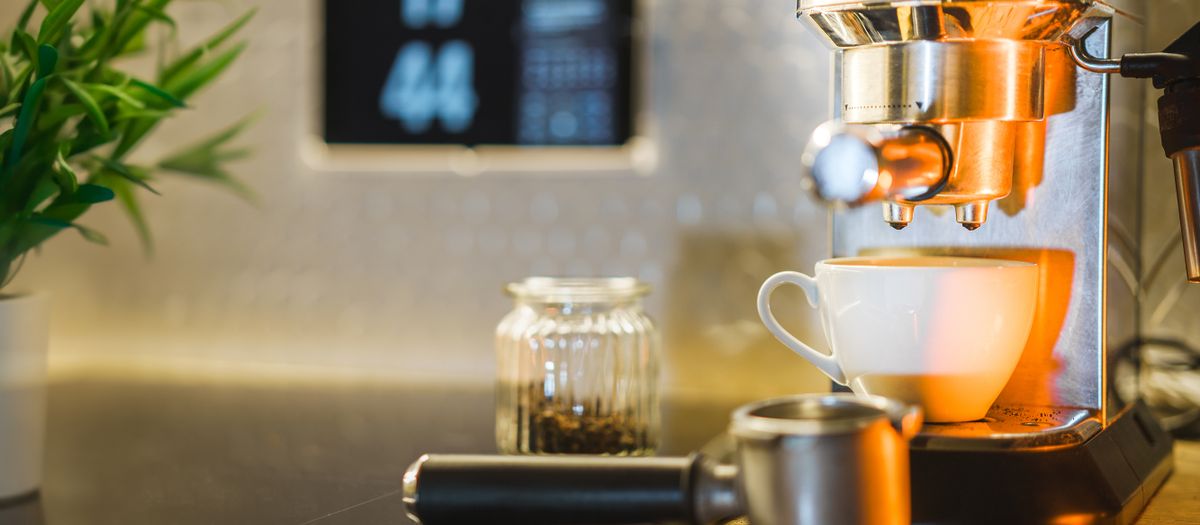
The best first machine is the one that suits how you actually drink — and that you will keep pulling shots on. This guide compares the specs that decide the fit — boiler type, PID, pump, group head, pre-infusion and tank — across single-boiler, heat-exchanger and dual-boiler machines, then matches them to your budget and milk-drink count. The verified picks appear in each slot once real product data is in.
A note on how to read this. There is no single "best" machine for everyone — the right one depends on your budget, how many milk drinks you pull, and your counter space. The value here is the framework: what each spec changes, so you can shortlist a machine that matches your situation. And remember the budget split — the grinder matters as much as the machine.
Specs verified against manufacturer details and current Amazon listings — no hands-on testing claims. Boiler type, PID, pump (vibration vs rotary), 9-bar pressure, group-head and portafilter figures are drawn from published manufacturer specs.
How to choose a home espresso machine
A handful of specs decide whether a machine suits you — and boiler architecture leads, because it follows how many milk drinks you actually pull. Read these first, then the picks make sense.
Boiler type — the spec that follows your milk-drink count
Boiler architecture is the most important spec on the page because it decides whether you can brew and steam together, and that maps directly to how many milk drinks you pull. A single boiler heats one thing at a time: you pull the shot, then wait while the boiler ramps up to steam temperature. For one or two milk drinks a day that wait is nothing, and the saved money is better spent on the grinder. A heat-exchanger draws brew water through a tube running inside a steam-temperature boiler, so it brews and steams near-simultaneously from a single boiler — the classic prosumer answer for several milk drinks without two boilers' worth of cost and heat-up. A dual boiler runs separate brew and steam boilers, each held at its own temperature, so it brews and steams at the same time with no compromise — the architecture for back-to-back milk drinks for a household.
Spec-by-spec, this is why the boiler should follow your drinks and not your ego. Overspending on a dual boiler for the occasional latte is the classic first-buy mistake — the money would have done far more in the grinder. Count your milk drinks first, pick the boiler to match, and let the budget split decide the rest. Not sure where you land? The Machine Matcher turns your drinks-per-day and milk-drink count into a boiler recommendation.
PID, pump and pre-infusion
A PID is the temperature spec. It holds brew water to a tight, repeatable target rather than letting it drift around a basic thermostat's swing, so the same dial-in tastes the same cup after cup. Spec-by-spec, a PID on a single boiler is the upgrade that pays off first, because shot consistency is what turns a fiddly machine into one you trust. The pump is the pressure spec: nearly every home machine reaches the 9 bar espresso wants, and the real choice is vibration versus rotary — a vibration pump is lighter, cheaper and a touch louder, while a rotary is quieter and can be plumbed in, which is why pump type shows up on the quietest-machine shortlist.
Pre-infusion is the gentle-start spec. It wets the puck at low pressure before ramping to full pressure, which helps the water saturate the grounds evenly and reduces channelling — those jets of water that punch through a puck and pull a sour, thin shot. Spec-by-spec, mechanical pre-infusion comes built into an E61 group, while some machines offer programmable pre-infusion electronically. It is a meaningful aid to even extraction, not a substitute for good grind and puck prep.
Group head, tank and counter fit
The group head is where temperature stability and build quality show up. A heavier brass group — the E61 being the prosumer benchmark — adds thermal mass that steadies brew temperature and delivers mechanical pre-infusion, at the cost of a longer heat-up and more weight and depth on the counter. Spec-by-spec, a stable group head is what keeps shot-to-shot temperature consistent; it is a hallmark of the prosumer single-boiler and heat-exchanger class rather than something you need on a first entry machine.
Tank size and footprint are the live-with-it specs. A larger reservoir means fewer refills; a plumbed machine skips them entirely but needs a water line. Footprint is the spec people forget until the box arrives — measure your counter depth and the height under your cabinets, because an E61 machine is tall and deep. If counter space is tight, the compact slot below is built around exactly that constraint, and the milk-drink guide covers the steam side in more depth if lattes are your main drink.
| Best for | Boiler type | PID | Pump | Group head | Pre-infusion |
|---|---|---|---|---|---|
| Best overall | ThermoCoil (single) | Yes (digital temp control) | 15-bar Italian | 54 mm | Yes (low-pressure) |
| Best budget | Thermoblock | Not listed | 15-bar | Proprietary portafilter | Not listed |
| Best heat-exchanger | 1.8 L heat exchanger | Hybrid PID, 4 selectable brew temperatures | Not listed | E61 commercial-style | Not listed |
| Best dual-boiler | Dual boiler | Not listed | 20-bar | Proprietary portafilter | Not listed |
| Best compact | ThermoJet (fast heat) | Yes (digital temp control) | 15-bar Italian | 54 mm | Yes (low-pressure) |
Our top picks
Best overall: Breville Barista Express Impress Espresso Machine with Built-in Grinder and Steam Wand

Best overall
Breville Barista Express Impress Espresso Machine with Built-in Grinder and Steam Wand
Breville
- Boiler type: ThermoCoil (single)
- PID: Yes (digital temp control)
- Pump: 15-bar Italian
- Group head: 54 mm
- Pre-infusion: Yes (low-pressure)
- Tank: 2 L removable
The Breville Barista Express Impress is an all-in-one grind-to-cup machine with assisted tamping and a steam wand. It is the best overall home machine for those who want one appliance to do everything.
Price as of Oct 11, 2026, 13:38 UTC — details
Prices and availability are accurate as of the date/time indicated and are subject to change. Any price and availability information displayed on Amazon at the time of purchase will apply.
Last checked 2026-10-09
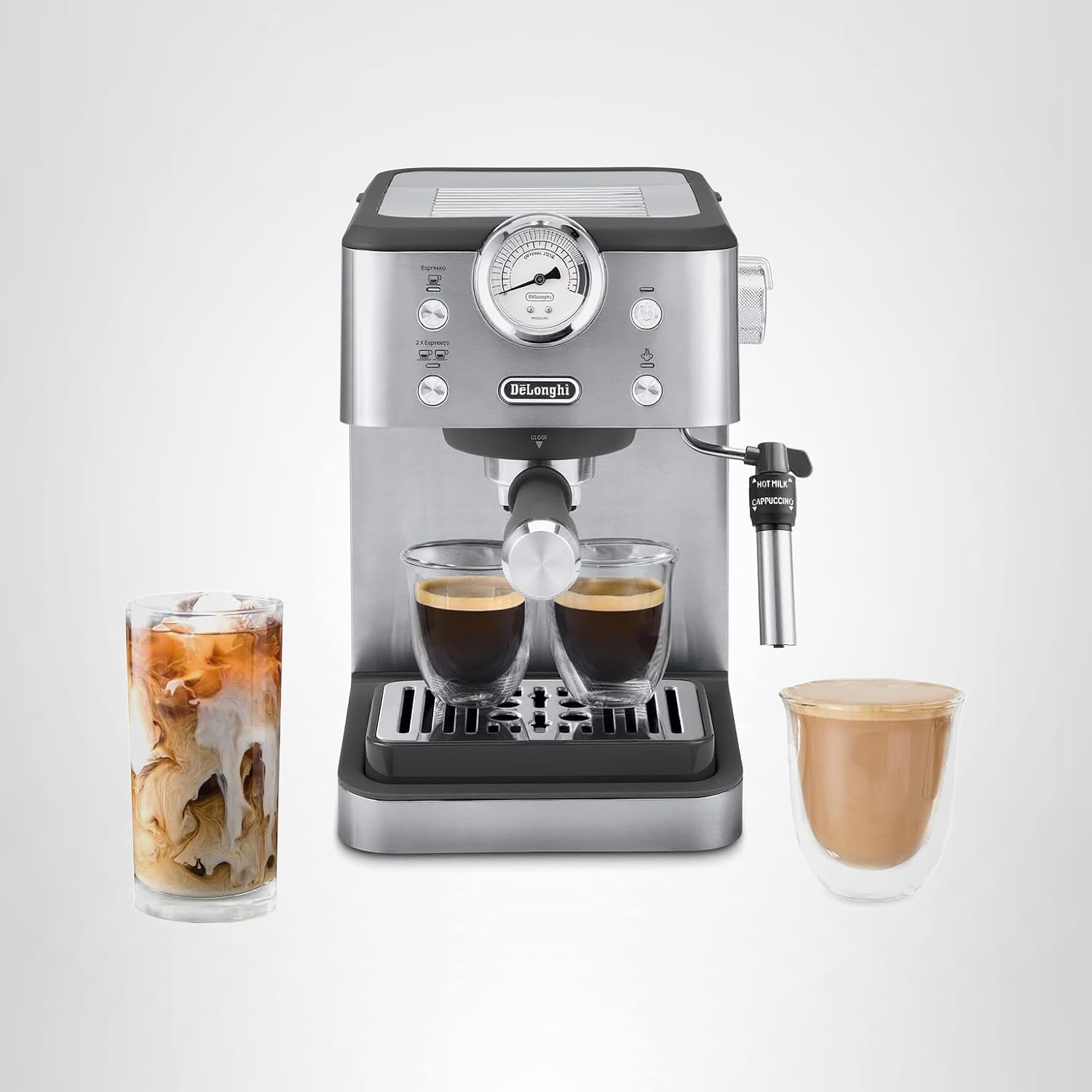
Best budget: De'Longhi Classic Signature Espresso Machine with Steam Wand
Best budget
De'Longhi Classic Signature Espresso Machine with Steam Wand
De'Longhi
- Boiler type: Thermoblock
- PID: Not listed
- Pump: 15-bar
- Group head: Proprietary portafilter
- Pre-infusion: Not listed
- Tank: Removable
The De'Longhi Classic Signature delivers entry-level espresso with a steam wand at a low price. It is the best budget pick for first-time home espresso buyers.
Price as of Oct 11, 2026, 13:38 UTC — details
Prices and availability are accurate as of the date/time indicated and are subject to change. Any price and availability information displayed on Amazon at the time of purchase will apply.
Last checked 2026-10-09
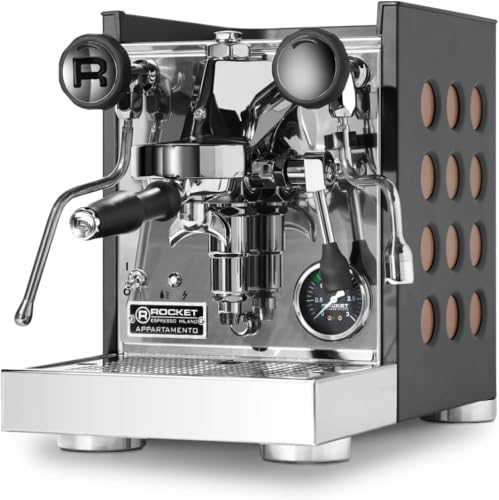
Best heat-exchanger: Rocket Espresso Appartamento TCA Espresso Machine, Black (Copper)
Best heat-exchanger
Rocket Espresso Appartamento TCA Espresso Machine, Black (Copper)
Rocket Espresso
- Boiler type: 1.8 L heat exchanger
- PID: Hybrid PID, 4 selectable brew temperatures
- Pump: Not listed
- Group head: E61 commercial-style
- Pre-infusion: Not listed
- Tank: 2.5 L top-fill
Rocket's Appartamento TCA pairs a 1.8 L heat-exchanger boiler with an E61 group head and a hybrid PID offering four selectable brew temperatures, so it brews and steams at the same time; handmade in Milan with a 2.5 L top-fill tank.
Price as of Oct 11, 2026, 13:38 UTC — details
Prices and availability are accurate as of the date/time indicated and are subject to change. Any price and availability information displayed on Amazon at the time of purchase will apply.
Last checked 2026-10-09
Best dual-boiler: Gevi Dual Boiler Espresso Machine with Independent Steam Boiler

Best dual-boiler
Gevi Dual Boiler Espresso Machine with Independent Steam Boiler
Gevi
- Boiler type: Dual boiler
- PID: Not listed
- Pump: 20-bar
- Group head: Proprietary portafilter
- Pre-infusion: Not listed
- Tank: Removable
The Gevi Dual Boiler has a separate steam boiler so brewing and steaming run independently, the cheapest true dual-boiler in this lineup. It is the best dual-boiler pick for home users wanting simultaneous brew and steam without prosumer pricing.
Price as of Oct 11, 2026, 13:38 UTC — details
Prices and availability are accurate as of the date/time indicated and are subject to change. Any price and availability information displayed on Amazon at the time of purchase will apply.
Last checked 2026-10-09
Best compact: Breville Bambino Plus Espresso Machine with Automatic Microfoam Milk Texturing

Best compact
Breville Bambino Plus Espresso Machine with Automatic Microfoam Milk Texturing
Breville
- Boiler type: ThermoJet (fast heat)
- PID: Yes (digital temp control)
- Pump: 15-bar Italian
- Group head: 54 mm
- Pre-infusion: Yes (low-pressure)
- Tank: 1.9 L removable
The Breville Bambino Plus packs fast ThermoJet heating and quality milk texturing into one of the smallest footprints available. It is the best compact pick for small kitchens that still want serious espresso.
Price as of Oct 11, 2026, 13:38 UTC — details
Prices and availability are accurate as of the date/time indicated and are subject to change. Any price and availability information displayed on Amazon at the time of purchase will apply.
Last checked 2026-10-09
Who should buy what
The first-time home barista — best overall
The best overall slot is built for the person leaving pods behind who wants a machine they will keep pulling shots on. Spec-by-spec, that points to a single-boiler machine with a PID and a stable group head: real temperature control, a forgiving learning curve, and money left in the budget for the grinder that matters as much. It covers one or two milk drinks a day with a short steam wait, which is what most first setups actually need.
The trade-off is the steam wait between brewing and steaming, and that is the right compromise here. The single biggest first-buy mistake is over-buying the machine and under-buying the grinder, so the overall slot deliberately keeps the boiler sensible and steers the saved budget toward grind quality. It is the slot fewest first-time buyers regret.
The tight budget — best budget
The best budget slot is about getting genuine temperature control and a 9-bar pump onto your counter without overspending. Spec-by-spec, a budget single boiler with a PID still measures and holds brew temperature the right way, which is the part you cannot upgrade later — and it leaves room in the budget for the grinder rather than swallowing it whole.
What you give up is steam recovery, build mass and the deepest adjustability — a budget machine steams a touch slower and feels lighter than a prosumer one. For a first machine that is the right trade, because a budget machine fed by a proper espresso grinder pulls far better shots than a shiny machine fed by a cheap one. Spend up on the grind, not the chrome.
The several-milk-drinks household — best heat-exchanger
The best heat-exchanger slot suits the home that pulls several milk drinks but does not want a full dual boiler. Spec-by-spec, a heat-exchanger brews and steams near-simultaneously from one boiler, so you texture milk while the shot is ready rather than waiting between the two — the prosumer answer for back-to-back lattes at one boiler's cost and heat-up.
The trade-off is that a heat-exchanger asks for a little temperature management on the brew side (a short flush to settle group temperature) and usually carries an E61's longer heat-up and larger footprint. For a household making a few milk drinks at a time, that is a fair price for steaming and brewing without the wait. The milk-drink guide goes deeper on the steam side.
The back-to-back entertainer — best dual-boiler
The best dual-boiler slot is for the household pulling milk drinks for several people in a row. Spec-by-spec, separate brew and steam boilers each hold their own temperature, so the machine brews and steams at the same time with no compromise and no flush routine — the architecture that genuinely saves time when the drinks keep coming.
The trade-off is cost, size and a longer heat-up — and the honest caveat that a dual boiler is wasted on the occasional latte. Spec-by-spec, the dual boiler only earns its premium when your milk-drink count is genuinely high; below that, the money does more in the grinder. Buy this slot because you actually pull back-to-back milk drinks, not because it is the top of the range.
The small kitchen — best compact
The best compact slot is built around counter space. Spec-by-spec, a compact machine trims footprint, tank size and sometimes boiler capacity to fit a tight counter and the cabinet height above it, while still giving a real 9-bar shot. It is the slot for the kitchen where a tall, deep E61 machine simply will not fit.
The trade-off is steam power and reservoir size — a compact machine usually steams a little slower and needs refilling more often. For one or two drinks a day in a small kitchen that is an easy trade. Measure your counter depth and under-cabinet height before you buy; footprint is the spec people regret overlooking most.
What to buy alongside the machine
A machine is the start of a small, natural cart. The grinder comes next and matters as much — see the best espresso grinders guide. Then the best espresso tampers guide covers the tamper, distributor and WDT tool that finish puck prep. Not sure which architecture fits you? The Machine Matcher turns your drinks-per-day and milk-drink count into a recommendation.
Frequently asked questions
What is the best home espresso machine for a beginner?
For most beginners, a single-boiler machine with a PID gives the best balance of temperature stability and value. It puts your money into a good group head and accurate brew temperature rather than a second boiler you may not need. Step up to a heat-exchanger or dual-boiler only when you pull enough milk drinks to want to brew and steam at the same time. Verified picks land on this page once real product data is in.
How much should I spend on a home espresso machine?
A genuinely capable home machine generally starts in the few-hundred-dollars range, but remember the grinder matters as much as the machine — split the budget so the grinder is not an afterthought. Overspending on a shiny dual-boiler and pairing it with a cheap grinder is the classic first-buy mistake.
Single boiler, heat exchanger or dual boiler?
A single boiler heats one thing at a time, so you brew then steam with a short wait — fine for one or two milk drinks. A heat-exchanger lets you brew and steam near-simultaneously from one boiler. A dual boiler has separate brew and steam boilers for true back-to-back milk drinks. Match the architecture to how many milk drinks you actually pull.
Do I need a PID on a home espresso machine?
A PID is the single spec that most improves shot consistency for the money on a single-boiler machine. Spec-by-spec, a PID holds brew temperature to a tight, repeatable target instead of letting it drift with a basic thermostat, so the same dial-in tastes the same cup after cup. It is not strictly required — plenty of good shots are pulled on thermostat machines — but on a single boiler it is the upgrade that pays back first.
Is an E61 group head worth it?
An E61 group is a heavy brass group that adds thermal mass and gives mechanical pre-infusion, which helps temperature stability and a gentle ramp-up of pressure. Spec-by-spec, the trade-off is a longer heat-up time and more weight and counter depth. It is a hallmark of the prosumer single-boiler and heat-exchanger class rather than a must-have on an entry machine.
Vibration pump or rotary pump?
Most home machines use a vibration pump; rotary pumps appear on higher-end and plumbed machines. Spec-by-spec, both reach the 9 bar espresso needs — the difference is that a rotary pump is quieter and can be plumbed to a water line, while a vibration pump is lighter, cheaper and slightly louder. For the quietest-machine shortlist, pump type is one of the specs that matters.