Best Espresso Machines for Milk Drinks
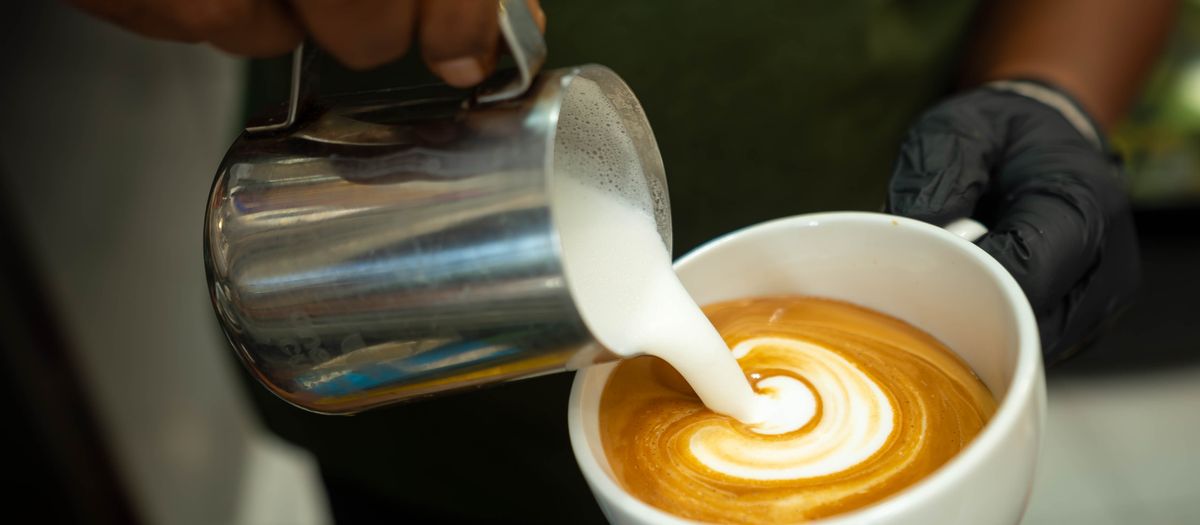
If lattes and cappuccinos are what you actually pull, steam matters as much as the shot — the steam half of the brand hook. This guide compares the specs that decide the fit for milk drinks — boiler type, steam power, PID, group head and pre-infusion — and matches them to how many milk drinks you make and how often they come back-to-back. The verified picks appear in each slot once real product data is in.
A note on how to read this. There is no single "best" machine for everyone — the right one depends on your milk-drink count, your budget and your counter space. The value here is the framework: what each spec changes, so you can shortlist a machine that matches how you drink.
Specs verified against manufacturer details and current Amazon listings — no hands-on testing claims. Boiler type, PID, pump, group-head and pre-infusion figures are drawn from published manufacturer specs; steam-recovery estimates are derived from boiler architecture, not lab measurement.
How to choose a machine for milk drinks
For milk drinks, the steam side carries as much weight as the shot — it is the steam half of the brand hook. A few specs decide whether a machine keeps up with how you actually drink, and boiler architecture leads because it sets both steam power and how fast steam recovers between drinks. Read these first, then the picks make sense.
Boiler type — the spec that sets your steam
Boiler architecture is the most important spec for milk drinks because it decides whether you can brew and steam together and how quickly steam comes back between drinks. A single boiler heats one thing at a time: you pull the shot, then wait while it ramps to steam temperature. Spec-by-spec, that wait is nothing for one or two milk drinks but adds up fast across a round of them. A heat-exchanger brews and steams near-simultaneously from one boiler, so you texture milk while the shot is ready — the prosumer answer for several milk drinks. A dual boiler runs separate brew and steam boilers, so it brews and steams at the same time with full steam on tap, which is what genuinely back-to-back milk drinks need.
Spec-by-spec, the boiler should follow your milk-drink count, not the other way around. A dual boiler is wasted on the occasional latte, where the money would do more in the grinder — but it earns every dollar when you make drinks for a household. Count how many milk drinks come back-to-back, then pick the architecture to match. The Machine Matcher turns that count into a recommendation and a steam-recovery estimate.
Steam power and the wand
Steam power and wand design decide the milk side of the drink. Spec-by-spec, more steam pressure lets you spin milk into tight microfoam faster, while weaker steam takes longer and is harder to control; boiler architecture sets how quickly that steam recovers so the second and third drink are as strong as the first. The wand is how you apply the steam — the number and angle of the tip holes and the wand's length and reach affect how easily you can position the pitcher and texture the milk. A controllable wand is what makes microfoam and latte art achievable; a stiff or awkward one fights you.
Spec-by-spec, this is why a milk-drink machine is judged on steam as much as on the shot. A machine with strong, quick-recovering steam and a workable wand textures milk well drink after drink; one with weak steam or an awkward wand struggles even if the espresso side is excellent. The milk frothing pitcher you pair with it shapes the pour, so the wand and the pitcher work as a pair.
PID, group head and pre-infusion for the shot base
A milk drink is still espresso plus milk, so the shot base matters even when milk is the star. A PID holds brew temperature to a tight target so the espresso under the milk is consistent — spec-by-spec, it keeps the base from drifting sour or bitter from one drink to the next. A stable group head, the E61 being the prosumer benchmark, adds thermal mass that steadies that temperature and delivers mechanical pre-infusion.
Pre-infusion wets the puck gently before full pressure, helping even saturation and reducing channelling for a cleaner shot under the milk. Spec-by-spec, these shot-side specs are the same ones the general machine guide covers — for milk drinks they matter because a sweet, even shot is what milk should be poured over, not a thin or sour one. Steam makes the drink, but the shot is still the foundation.
| Best for | Boiler type | PID | Pump | Group head | Pre-infusion |
|---|---|---|---|---|---|
| Best overall for milk drinks | ThermoCoil (single) | Yes (digital temp control) | 15-bar Italian | 54 mm | Yes (low-pressure) |
| Best budget for milk drinks | Thermoblock | Not listed | 20-bar | Proprietary portafilter | Not listed |
| Best for latte art | ThermoJet (fast heat) | Yes (digital temp control) | 15-bar Italian | 54 mm | Yes (low-pressure) |
| Best for back-to-back steaming | Dual boiler | Not listed | 20-bar | Proprietary portafilter | Not listed |
| Best compact for milk drinks | Thermoblock | Not listed | 15-bar | Proprietary portafilter | Not listed |
Our top picks
Best overall for milk drinks: Breville Barista Express Impress Espresso Machine with Built-in Grinder and Steam Wand

Best overall for milk drinks
Breville Barista Express Impress Espresso Machine with Built-in Grinder and Steam Wand
Breville
- Boiler type: ThermoCoil (single)
- PID: Yes (digital temp control)
- Pump: 15-bar Italian
- Group head: 54 mm
- Pre-infusion: Yes (low-pressure)
- Tank: 2 L removable
The Breville Barista Express Impress combines a built-in grinder, assisted tamping, and a powerful steam wand in one machine. It is the best all-round pick for milk drinks where one appliance should grind, pull, and steam.
Price as of Oct 11, 2026, 13:38 UTC — details
Prices and availability are accurate as of the date/time indicated and are subject to change. Any price and availability information displayed on Amazon at the time of purchase will apply.
Last checked 2026-06-15
Best budget for milk drinks: Gevi 20 Bar Espresso Machine with Milk Frother Steam Wand (2026 Upgrade)

Best budget for milk drinks
Gevi 20 Bar Espresso Machine with Milk Frother Steam Wand (2026 Upgrade)
Gevi
- Boiler type: Thermoblock
- PID: Not listed
- Pump: 20-bar
- Group head: Proprietary portafilter
- Pre-infusion: Not listed
- Tank: Removable
The Gevi 20 Bar offers a steam wand for milk drinks at a budget price with quick thermoblock heat-up. It suits beginners who want cappuccinos and lattes without a big spend.
Price as of Oct 11, 2026, 13:38 UTC — details
Prices and availability are accurate as of the date/time indicated and are subject to change. Any price and availability information displayed on Amazon at the time of purchase will apply.
Last checked 2026-06-15
Best for latte art: Breville Bambino Plus Espresso Machine with Automatic Microfoam Milk Texturing

Best for latte art
Breville Bambino Plus Espresso Machine with Automatic Microfoam Milk Texturing
Breville
- Boiler type: ThermoJet (fast heat)
- PID: Yes (digital temp control)
- Pump: 15-bar Italian
- Group head: 54 mm
- Pre-infusion: Yes (low-pressure)
- Tank: 1.9 L removable
The Breville Bambino Plus heats in seconds and offers both automatic microfoam and a manual steam wand for practicing latte art. It is the best pick for milk-texturing quality in a small machine.
Price as of Oct 11, 2026, 13:38 UTC — details
Prices and availability are accurate as of the date/time indicated and are subject to change. Any price and availability information displayed on Amazon at the time of purchase will apply.
Last checked 2026-06-15
Best for back-to-back steaming: Gevi Dual Boiler Espresso Machine with Independent Steam Boiler

Best for back-to-back steaming
Gevi Dual Boiler Espresso Machine with Independent Steam Boiler
Gevi
- Boiler type: Dual boiler
- PID: Not listed
- Pump: 20-bar
- Group head: Proprietary portafilter
- Pre-infusion: Not listed
- Tank: Removable
The Gevi Dual Boiler uses a separate steam boiler so you can pull a shot and steam milk at the same time and steam continuously. It is the best pick for households making several milk drinks back-to-back.
Price as of Oct 11, 2026, 13:38 UTC — details
Prices and availability are accurate as of the date/time indicated and are subject to change. Any price and availability information displayed on Amazon at the time of purchase will apply.
Last checked 2026-06-15
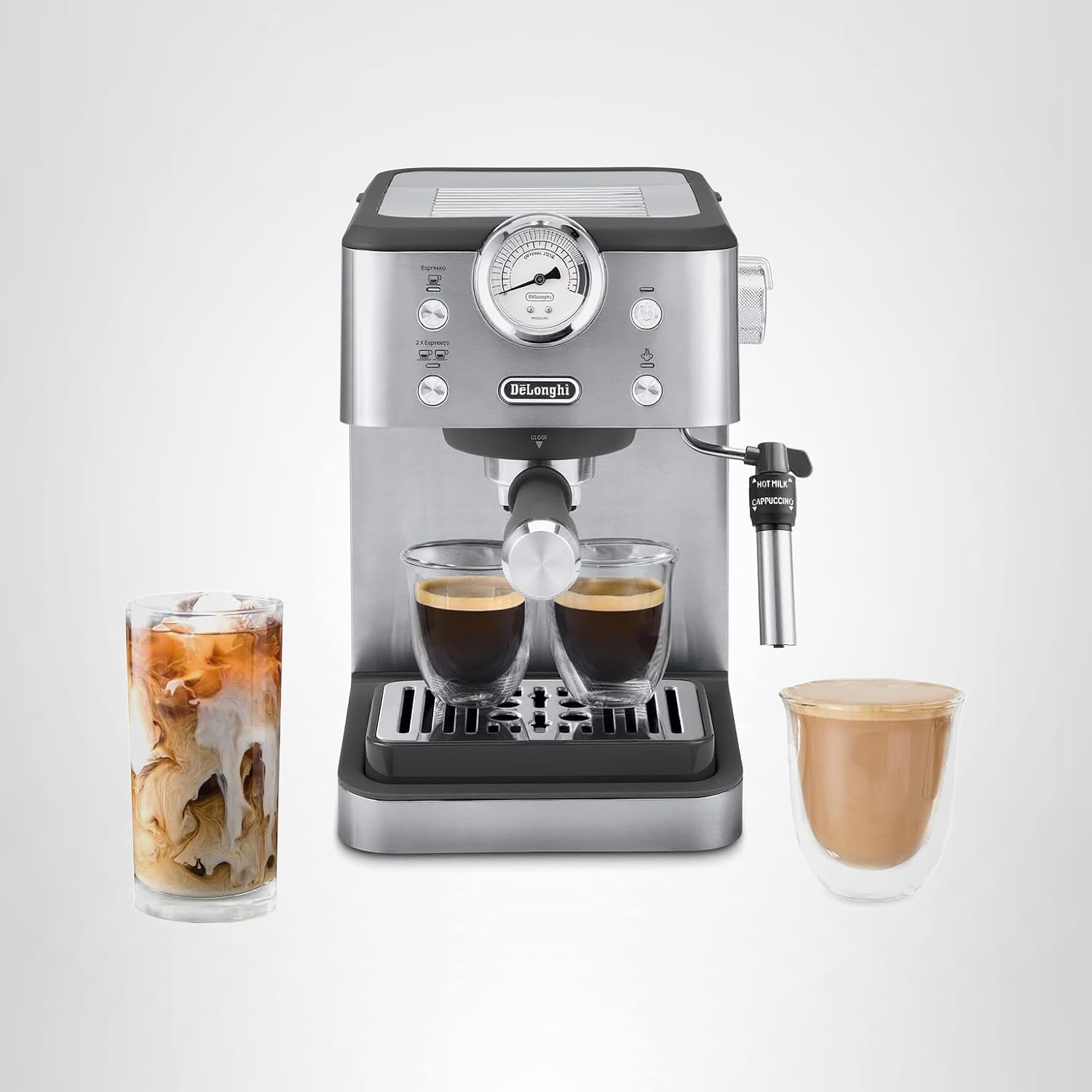
Best compact for milk drinks: De'Longhi Classic Signature Espresso Machine with Steam Wand
Best compact for milk drinks
De'Longhi Classic Signature Espresso Machine with Steam Wand
De'Longhi
- Boiler type: Thermoblock
- PID: Not listed
- Pump: 15-bar
- Group head: Proprietary portafilter
- Pre-infusion: Not listed
- Tank: Removable
The De'Longhi Classic Signature is a small-footprint machine with a steam wand for milk drinks at an entry price. It suits compact kitchens where counter space is limited.
Price as of Oct 11, 2026, 13:38 UTC — details
Prices and availability are accurate as of the date/time indicated and are subject to change. Any price and availability information displayed on Amazon at the time of purchase will apply.
Last checked 2026-06-15
Who should buy what
The everyday latte drinker — best overall for milk drinks
The best overall for milk drinks slot is for the home that pulls a steady run of lattes and cappuccinos and wants steam that keeps up. Spec-by-spec, that points to an architecture that recovers steam quickly — a heat-exchanger or dual boiler depending on volume — with strong, controllable steam and a stable shot base under the milk. It is the slot that balances the steam side and the shot side for a household's daily milk drinks.
The trade-off is cost and footprint: a quick-steaming machine is usually larger and pricier than a single boiler. Spec-by-spec, that is the right trade when milk drinks are your daily habit, because steam recovery is exactly what you feel across a round of drinks. Match it with a proper grinder so the shot under the milk is as good as the steam.
The one-or-two-a-day, tight budget — best budget for milk drinks
The best budget for milk drinks slot suits the home making a latte or two a day without spending up. Spec-by-spec, a single boiler with a PID brews a consistent shot and steams milk well for one or two drinks, with only a short wait to switch from brewing to steaming — fine when the drinks are not coming back-to-back.
What you give up is steam recovery: across several milk drinks the single-boiler wait adds up. For a one- or two-drink routine that is no real loss, and the saved money does more in the grinder. Spec-by-spec, buy this slot if your milk-drink count is low — over-buying boiler you do not need is the classic first-machine mistake the beginner's guide warns about.
The latte-art learner — best for latte art
The best for latte art slot is for the home barista learning to pour. Spec-by-spec, latte art needs steady, controllable steam to texture tight microfoam, a wand you can position easily, and a stable shot base beneath the milk — the combination that makes a clean rosetta possible rather than a fight. Steam control matters more here than raw power.
The trade-off is that a controllable, art-friendly setup leans toward the prosumer end and pairs best with a sharp-spouted milk pitcher. Spec-by-spec, the wand and the pitcher are a pair — pour control comes from both. This slot is about steam you can steer, not just steam you can hear.
The household entertainer — best for back-to-back steaming
The best for back-to-back steaming slot is for the home making milk drinks for several people in a row. Spec-by-spec, that calls for a dual boiler: separate brew and steam boilers, each at its own temperature, so the machine brews and steams at the same time with full steam that recovers instantly between drinks — no waiting, no compromise across a round.
The trade-off is cost, size and heat-up time, and the honest caveat that this is overkill for the occasional latte. Spec-by-spec, the dual boiler only earns its premium when milk drinks genuinely come back-to-back; below that, a heat-exchanger or single boiler is the smarter spend. Buy this slot because you actually entertain with milk drinks, not for the badge.
The small kitchen, milk drinks included — best compact for milk drinks
The best compact for milk drinks slot is for the tight counter that still wants lattes. Spec-by-spec, a compact machine trims footprint and tank size while keeping a usable steam wand, so it makes a milk drink or two without the depth and height of a full E61 machine. It is the slot for the small kitchen that will not fit a larger boiler.
The trade-off is steam recovery and reservoir size — a compact machine steams a little slower and needs refilling more often. For one or two milk drinks a day in a small space that is an easy trade. Spec-by-spec, measure your counter depth and under-cabinet height first; fit is the constraint this slot is built around.
What to buy alongside the machine
A milk-drink machine still needs a grinder that matters as much — see the best espresso grinders guide — and the best home espresso machines guide covers the machines silo in full. Not sure which boiler architecture fits you? The Machine Matcher turns your milk-drink count into a recommendation.
Frequently asked questions
What is the best espresso machine for milk drinks?
For milk drinks, prioritise steam power and a boiler architecture that suits how many you pull. A heat-exchanger or dual-boiler shines for several back-to-back lattes; a single boiler handles one or two with a short wait between brewing and steaming. Verified picks land on this page once real product data is in.
Do I need a dual boiler for lattes and cappuccinos?
Only if you make several in a row. A dual boiler brews and steams at the same time, which saves real time when you are making drinks for more than one person. For one or two milk drinks a day, a single boiler or heat-exchanger is plenty.
What makes a machine good for latte art?
Steady, controllable steam — enough power to texture milk well but with a wand you can control for microfoam. Boiler architecture that recovers steam quickly helps when you pull several drinks, and a stable brew temperature keeps the espresso base consistent.
Does a single boiler work for lattes and cappuccinos?
Yes, for one or two milk drinks at a time. Spec-by-spec, a single boiler brews the shot, then switches to steam temperature with a short wait before you texture the milk — perfectly fine when you are making a drink or two. The wait only becomes a real cost when you pull several milk drinks back-to-back, which is where a heat-exchanger or dual boiler earns its place.
How much does steam power matter for milk drinks?
Steam power decides how quickly and smoothly you can texture milk. Spec-by-spec, more steam pressure and a well-designed wand let you spin milk into tight microfoam faster, while weaker steam takes longer and is harder to control. It is the spec that most affects the milk side of the drink — and the half of the brand that the steam wand represents. Boiler architecture sets how fast steam recovers between drinks.
Why does the wand matter as much as the boiler for milk drinks?
The boiler supplies the steam; the wand is how you apply it. Spec-by-spec, the number and angle of the steam tip holes and the wand length affect how easily you can position the pitcher and spin the milk — a controllable wand makes microfoam and latte art achievable, while a stiff or awkward one fights you. Steam power and wand design together decide the milk side, which is why both matter alongside the boiler.