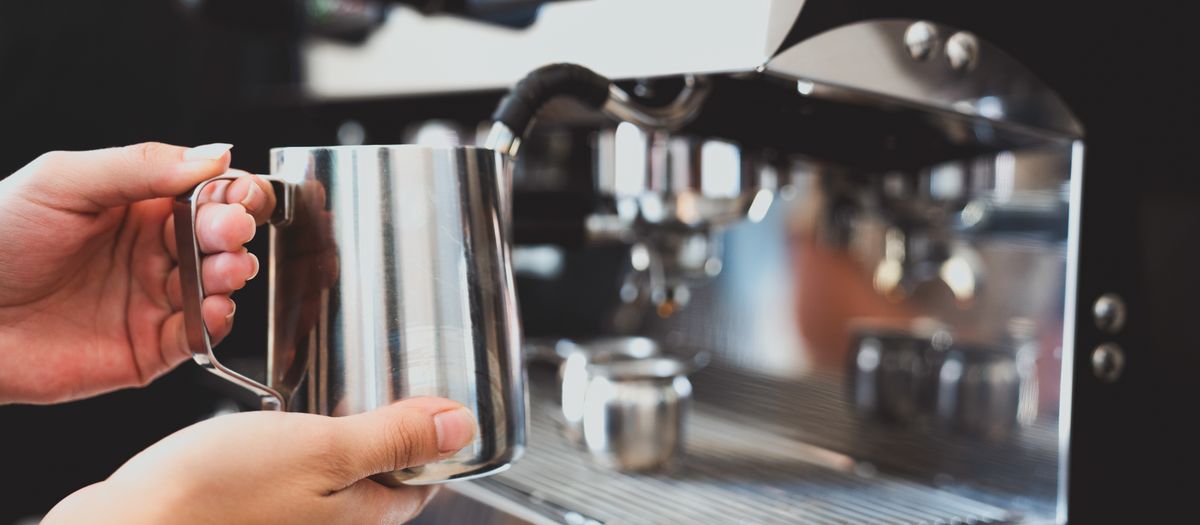
There’s a myth in home espresso that you need a dual boiler to steam decent milk. You don’t. I’ve been steaming milk on a single-boiler machine for years and I make a flat white every morning that I’m genuinely happy with. The single boiler just asks you to do things in a slightly different order, and once it’s a routine you stop noticing.
The one real difference: you wait a beat
On a single boiler, the same boiler does brew and steam, so it can only be at one temperature at a time. You pull your shot at brew temperature, then the machine heats up to steam temperature, then you steam. There’s a short wait in between while it climbs — usually well under a minute.
That’s the whole “limitation.” For one or two milk drinks it is a complete non-issue. I pull my shot, flip the switch to steam, give my pitcher and milk a quick prep while it heats, and by the time I’m ready the wand is too. The wait disappears into the workflow.
My actual morning routine
Here’s how it goes, in order, so the wait never costs me anything:
- Pull the shot into the cup and set it aside.
- Flip the machine to steam and let it start climbing.
- While it heats, pour cold milk into a cold pitcher — fill it to about the bottom of the spout.
- Once it’s at steam temperature, purge the wand for a second to clear condensation, then steam.
- Wipe and purge the wand straight after, every time.
The cold-milk-cold-pitcher part matters more than the machine. Starting cold gives you a longer window to get the texture right before the milk gets too hot.
Getting microfoam, not bubbles
Good milk for a latte or flat white is microfoam — glossy, paint-like, with no big bubbles. Two stages get you there:
Stretch: at the start, keep the wand tip just at the surface so it pulls air in with a gentle hiss. This is where you add volume. Only do it for a couple of seconds — most beginners over-stretch and end up with stiff, bubbly foam.
Texture: then sink the tip slightly deeper and angle the pitcher so the milk spins in a whirlpool. No more hissing now — you’re just rolling the milk to break any bubbles down into fine, even foam. Stop when the pitcher is hot to the touch but not too hot to hold.
Give it a swirl and a tap on the counter, and you’ve got pourable microfoam. That’s a single boiler doing everything a milk drink actually needs.
When a single boiler stops being enough
The honest line: if you’re making milk drinks for a whole household, back to back, that little reheat wait between every shot and steam adds up and gets annoying. That’s the point where a heat-exchanger or dual boiler earns its money. But for one or two people, a single boiler steams milk just fine — and the saved money is better off in your grinder.
If you mostly drink lattes and cappuccinos and you’re weighing machines, I broke down what to look for in the best espresso machines for milk drinks guide.
This is my own day-to-day home-barista experience, not a measured test of any machine. Steam to your own taste and follow your machine’s instructions.